Decoding the British Calm

Decoding the British Calm
What do the British say and what do they mean?
The famous British stiff upper lip refers to the cultural ideal of staying calm, composed, and emotionally restrained, even stronger in difficult situations. It reflects a long tradition of valuing self-control, understatement, and dignity under pressure. Rather than showing strong emotions, the Britts often communicate through subtle cues, dry humour, and understatement.
"Keep Calm and Carry on" wasn't just a slogan in the UK during World War I and II, it reflected the national ideal of courage through hardship. The Britts tend to downplay problems, avoid emotional overstatements, and maintain a polite, measured tone.
Understanding the stiff upper lip helps explain why British colleagues may appear reserved, calm, or cool, even when they care deeply. It's not coldness, but a cultural style of expressing professionalism and resilience. Through their many understatements and reserved expressions, the British don't always communicate in a way that's easily understood by other cultures. Curious about what your British colleagues really mean? Check out the table, which shows common British expressions, their actual meaning, and how others might interpret them.
In contrast, in countries like Italy or Brazil, it is much more acceptable to show emotions openly through voice, gestures, and facial expressions. Expressiveness signals warmth, engagement and genuine care.
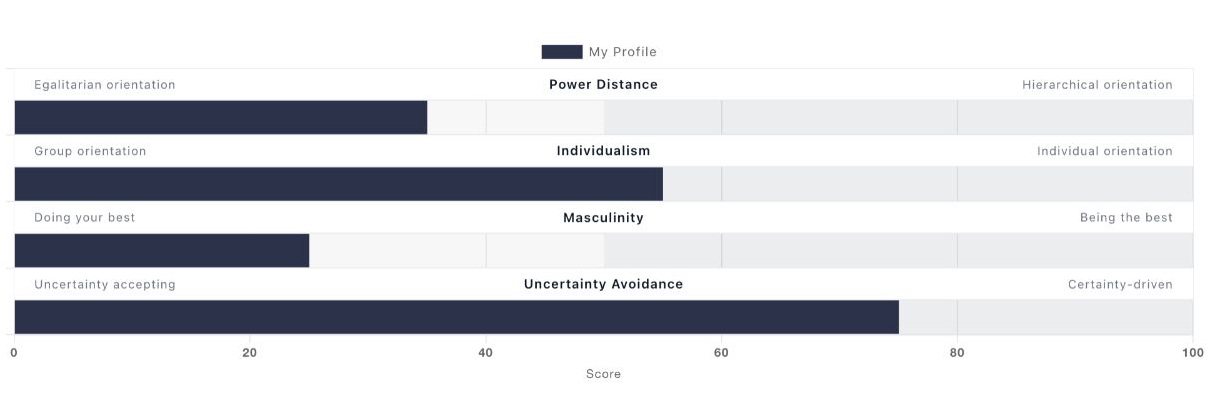
There is a clear correlation between a country's score on Hofstede's Uncertainty Avoidance Index (UAI) and how acceptable it is to express emotions in public. Importantly, this has nothing to do with whether people feel emotions, but how culturally acceptable it is to show them. The higher the UAI score, the more expressing emotions in business is accepted or even appreciated.
You can explore this yourself in our country comparison tool. If you want to dive deeper into this relationship and learn how to understand emotional expression across cultures, check out our module on Showing Emotions.
British Expressions Decoded
What the British say | What the British mean | What others understand |
|---|---|---|
I hear what you say | I disagree and do not want to discuss it further | They accept my point |
With the greatest respect.. | I think you are wrong | They are listening to me |
That's not bad | That's good | That's poor |
That's a very brave proposal | You are insane | He thinks I have courage |
Quite good | A bit disappointing | Quite good |
I would suggest | Do it or be prepared to justify yourself | Think about the idea, but do what you like |
Oh, by the way | The primary purpose of our discussion is... | This is not very important |
I was a bit disappointed that | I am annoyed that | It doesn't really matter |
Very interesting | That is clearly nonsense | They are impressed |
I'll bear it in mind | I've forgotten it already | They will use it when appropriate |
I'm sure it's my fault | It's your fault | Why do they think it was their fault? |
You must come for dinner | It's not an invitation, I'm just being polite | I will get an invitation soon |
I almost agree | I don't agree at all | He's not far from agreement |
I only have a few minor comments | Please re-write completely | He has found a few typos |
Could we consider some other options | I don't like your idea | They have not yet decided |
Perhaps you could give this some more thought | Don't do it, it's a bad idea | It's a good idea, keep developing it |
That is an original point of view | Your idea is stupid | They like my idea |
Recent blogs
Decoding the British Calm
March 28, 2026
Why are the Dutch so direct?
March 14, 2026Related post
Why are the Dutch so direct?
The Dutch are known for their directness and "say-it-as-it-is" style of communication. Learn 8 communication tips to come across a bit more diplomatic.
Read more